
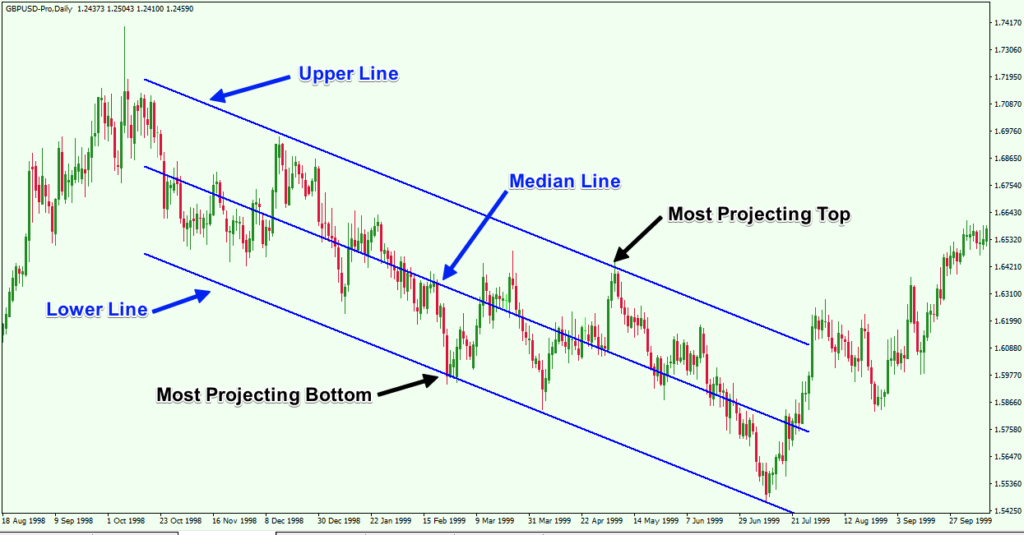
Best Practices for Trading the Linear Regression Channel
Best Practices for Trading the Linear Regression Channel is best understood as a decision framework rather than a stand-alone buy or sell signal. The useful question is not whether a setup looks perfect on one chart, but whether price structure, volatility, timing and risk all support the same trade idea. This guide focuses on that practical interpretation so traders can test the concept instead of relying on screenshots or hindsight.

Key Questions This Guide Answers
- What is a Linear Regression Channel
- Structure of the Linear Regression Channel Indicator
- Upper Linear Regression Line
Reading the Signal in Real Time
Technical signals are more reliable when they agree with market structure. A bullish signal near established support after selling pressure weakens has different meaning from the same signal directly below major resistance. Look for location first, then confirmation. Higher-timeframe structure can define direction while a lower timeframe refines timing.
Avoid Indicator Redundancy
Two indicators can appear to confirm each other while actually using nearly identical price inputs. Pair complementary information instead: structure for location, momentum for participation, volatility for stop expectations and volume or liquidity clues where reliable data exists.
Start With Context
Before applying Best Practices for Trading the Linear Regression, identify the market environment. Check whether price is trending, ranging or moving through a high-volatility event. A method that performs well in an orderly trend can behave very differently in a compressed range. Mark important swing highs and lows, note the active trading session, and check whether scheduled news could change liquidity.
Build Objective Confirmation Rules
A usable Best Practices for Trading the Linear Regression plan needs conditions that can be verified before entry. Define the timeframe used for context, the trigger timeframe, the exact event that confirms the setup, and the condition that cancels it. Avoid vague rules such as “looks strong.” A better rule references a close, break, rejection, momentum shift or other observable event.
A simple decision checklist
Confirm the market condition, identify the level or catalyst, define the trigger, locate invalidation, calculate size, and check the expected reward against the risk. Skip the trade when one of the required conditions is missing.
Plan Risk Before Entry
Risk should be decided before the order is placed. The stop belongs beyond the technical invalidation point rather than at an arbitrary distance chosen only to reduce position size. Once the stop distance is known, calculate position size from a fixed account-risk limit. This keeps a wider stop from silently creating a larger financial loss.
Manage the Trade, Not the Prediction
After entry, price can move in several paths even when the original analysis is reasonable. Decide in advance whether the trade will use a fixed target, structural target, trailing method or partial exits. Avoid repeatedly widening the stop because the market moved against the position. The purpose of a trade plan is to reduce improvisation when money is at risk.
Common Mistakes to Avoid
Frequent mistakes include using Best Practices for Trading the Linear Regression without broader context, entering after an extended move, stacking several indicators that measure the same thing, risking more after a loss, and judging a method from only a few trades. Another problem is optimizing rules until they fit historical charts perfectly. Simple rules that survive different market conditions are usually more useful than a fragile “perfect” backtest.
How to Test the Idea
Test Best Practices for Trading the Linear Regression on historical data and then in forward conditions before committing meaningful capital. Record the instrument, session, setup type, entry, stop, target, result in risk units, maximum favorable excursion and maximum adverse excursion. Review at least several dozen comparable setups. Win rate alone is not enough; expectancy, drawdown and execution quality matter too.
Practical Takeaway
The strongest use of Best Practices for Trading the Linear Regression is as one component of a complete process. Combine clear context, objective confirmation, predefined invalidation and consistent sizing. If the method cannot be written as rules and reviewed after the trade, simplify it until it can. The objective is repeatable decision-making—not certainty about the next candle.
Frequently Asked Questions
Is Best Practices for Trading the Linear Regression enough to trade by itself?
No. It should be combined with context, an invalidation level and position sizing. No indicator, pattern or macro release can remove uncertainty from trading.
Which timeframe is best?
The best timeframe depends on holding period and execution style. A practical approach is to use a higher timeframe for context and a lower timeframe for entry confirmation, while keeping both rules consistent during testing.
How much should be risked?
There is no universal percentage suitable for every trader. Use an amount small enough that a normal losing streak does not force emotional decisions or threaten account survival. Test the strategy’s drawdown before increasing exposure.
Risk note: Forex and leveraged products can produce rapid losses. Educational material is not a guarantee of performance or personalized financial advice.