
For traders following the forex market, the useful question is not only where price may move next, but what evidence would confirm or reject that idea. This analysis organizes the market into scenarios, decision points and risk controls that can be applied without assuming that any forecast is guaranteed.
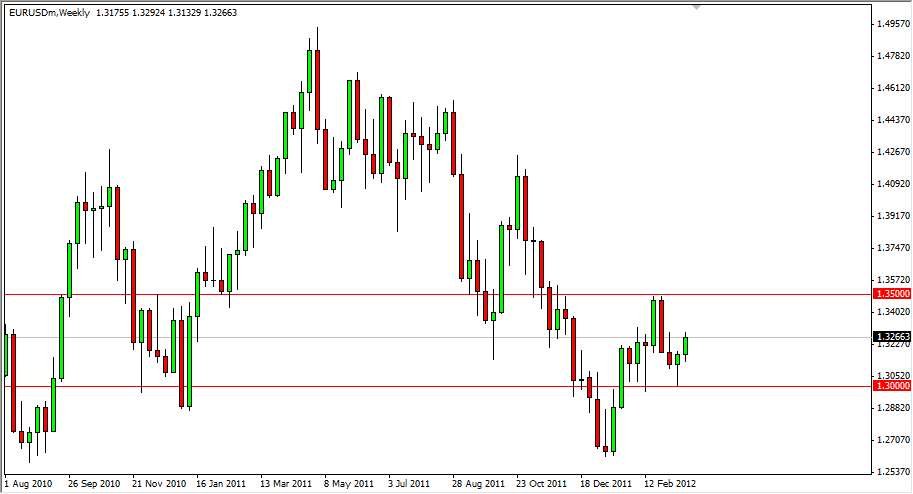
Focus: weekly forex forecast. The discussion below is educational market analysis, not a promise of profit or personalized financial advice.
the forex market market context
A sound reading starts with structure. Traders should compare the latest impulse with the preceding swing and ask whether buyers or sellers are actually gaining control. Important themes appearing in the source material include trend direction, momentum, support and resistance, volatility and event risk. Instead of treating any one indicator as decisive, confirmation is stronger when price structure, momentum and the reaction around a well-defined level point in the same direction.
Levels referenced in the underlying market material include 1.30, 1.35, 200, 100, 1.04, 1.12. These numbers should be treated as historical/contextual reference points, not timeless signals. A level matters only when current price action reacts to it with convincing acceptance, rejection or a breakout followed by follow-through.
Bullish scenario: what would strengthen the case?
A bullish case for the forex market becomes more credible when price stops making lower lows, reclaims a nearby resistance area and then holds above it on a retest. Traders can look for higher lows, improving candle closes and reduced selling pressure. Entering simply because price has fallen can be dangerous; evidence of demand is more useful than trying to predict the exact bottom.
If a breakout occurs, the quality of the move matters. A brief spike above resistance that immediately reverses is weaker than a close above the level followed by sustained trading on the higher side. Waiting for confirmation can mean missing the first part of a move, but it can also filter many false breaks.
Bearish scenario: what would invalidate the bullish view?
The bearish scenario deserves equal attention. Failure to hold reclaimed support, repeated rejection from resistance, or a decisive break beneath a recent swing low can shift the balance back toward sellers. For the forex market, traders should avoid assuming that a previous support level must hold simply because it worked before.
When downside momentum accelerates, chasing a large bearish candle can create poor risk-to-reward. A more disciplined approach is to wait for a pullback or consolidation, identify the invalidation point first, and only then decide whether the potential reward justifies the risk.
How to turn the analysis into a trading plan
Before entering, define three things: the condition that triggers the trade, the price action that proves the idea wrong, and the area where profits may reasonably be taken. This prevents the common mistake of moving a stop simply because a losing position is uncomfortable. Position size should be calculated from the distance to invalidation rather than chosen first.
Short-term traders should also compare the higher-timeframe direction with the entry timeframe. When the lower timeframe is moving against the broader structure, the trade may be a counter-trend setup and should be treated differently from a continuation trade. During major economic releases, spreads and slippage can increase, so technical levels may temporarily behave less reliably.
Risk factors traders should watch
Forex forecasts can be disrupted by central-bank communication, inflation and employment data, geopolitical headlines, abrupt changes in bond yields and shifts in general risk sentiment. Correlated markets can also provide context, but correlation is not constant. A relationship that worked during one market regime can weaken or reverse in another.
Risk management therefore matters more than forecast confidence. No setup has a 100% probability. Limiting exposure per idea, avoiding excessive leverage and accepting invalidation are essential if a trader wants to survive a series of losing trades without damaging the account.
Practical checklist before taking a position
- Identify the dominant higher-timeframe structure.
- Mark the nearest meaningful support and resistance.
- Wait for a clear trigger rather than entering from fear of missing out.
- Define invalidation before calculating position size.
- Check the economic calendar for high-impact events.
- Require enough potential reward to justify the planned risk.
- Reassess the setup if market structure changes.
Frequently asked questions
Is the forex market guaranteed to follow this forecast?
No. A forecast is a scenario based on available evidence. New information can change market expectations quickly, which is why confirmation and invalidation rules are necessary.
Should traders enter immediately when a level breaks?
Not necessarily. Some traders wait for a candle close or a retest because intraday spikes can create false breakouts. The appropriate method depends on timeframe, volatility and risk tolerance.
What is more important: the target or the stop?
Both matter, but the invalidation point should normally be identified first. Once the risk is known, a trader can judge whether the potential target offers an acceptable risk-to-reward profile.
Bottom line
The strongest way to use this the forex market analysis is as a decision framework, not as a prediction to follow blindly. Let price confirm the scenario, keep the alternative scenario visible, and reduce risk when volatility or event uncertainty rises. Consistency comes from repeatable decision-making and controlled losses, not from expecting every forecast to be correct.